How to Solve Matrix Reasoning Problems: Spot the Rule in 3 Steps
/
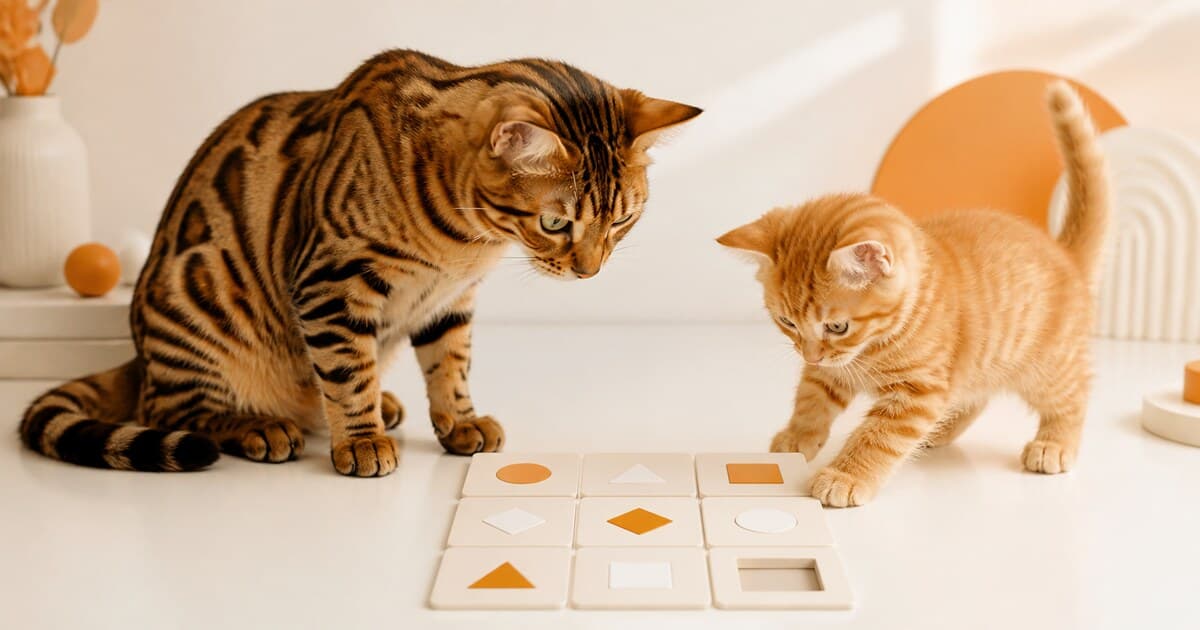
Matrix reasoning problems yield to a fixed order: rows, then columns, then relationships. Simply fixing that order narrows where you hunt for the rule and changes both accuracy and speed substantially. This article covers those three steps and how to narrow down when none of them settles it.
What matrix reasoning problems measure
Matrix reasoning presents figures arranged in a 3x3 grid; you find the rule and choose what belongs in the blank cell. Represented by Raven's Progressive Matrices, it is the standard way to measure fluid reasoning (Gf) without depending on language.
Carpenter, Just, and Shell (1990) showed that difficulty in this format is largely explained by how many rules hold simultaneously within a single item. Turned around, that means decomposing the rules one at a time will always get you there — which is exactly why fixing your order of inspection pays off.
Step 1: Look across the rows (left to right)
First, check how each row changes from left to right. Rows are the most common direction for a rule. The frequent patterns are:
- Quantity: elements increase or decrease by a fixed amount (arithmetic progression)
- Rotation: turning by a fixed angle (45°, 90°, and so on)
- Movement: a filled cell shifts in a consistent direction
- Attribute change: fill switches in sequence (outline, hatched, solid)
Confirm that the same rule holds in all three rows. Judging from a single row leaves you at the mercy of a coincidence that happens to fit.
Step 2: Look down the columns (top to bottom)
If the rows show no rule, check how the cells change from top to bottom. The attributes to check are the same four as in Step 1. Many items place separate rules on rows and columns, in which case overlaying the two constraints pins the answer down uniquely.
When rows narrow you to two candidates but cannot break the tie, there is almost certainly a second rule on the column side. The same 'overlay two constraints' idea is the central method in classification problems as well.
Step 3: Suspect a relationship (superposition)
When neither rows nor columns show a simple change, a relationship between cells is at work. The most common family is figure superposition.
- OR: all elements from the left and middle cells combined give the right cell
- XOR: only elements present in exactly one of them survive; shared parts cancel
- AND: only elements common to both remain
A quick heuristic: if elements are increasing, suspect OR; if decreasing, suspect AND or XOR. You can see worked examples on the logical reasoning problems page.
Narrowing down when the three steps do not settle it
If all three fail to leave a single answer, multiple attributes are changing at once. Fix one attribute and compare within it — for instance, narrow candidates by rotation alone, then compare fill among what remains. Accuracy drops the moment you mix attributes because working memory has a hard limit on simultaneous information.
Timing: never fixate on one item
Matrix reasoning items typically add concurrent rules as the test progresses, so they get harder toward the end. Burning your clock on an early item costs you later ones you could have solved. If no approach forms within 30 seconds, answer provisionally and move on (see five things to do before the test).
Try it on real problems
A method only sticks once you solve with it. NekoIQ's free IQ test runs 20 questions in about 10 minutes, scoring four matrix-reasoning domains with item response theory (IRT). The results page breaks out each domain separately, so you can see how far these three steps carried you.
Share this article

Measure your IQ for free
20 questions in about 10 minutes give you your estimated IQ, deviation score, and national ranking.
Take the IQ test →Related articles
Editorial note & disclaimer
This article was written and edited by the NekoIQ Editorial Team with reference to academic literature on psychometrics, including CHC theory and Item Response Theory (IRT). Statistics and percentages are calculated from a normal distribution model with a mean of 100 and a standard deviation of 15.
The tests on this site provide estimates for entertainment and self-understanding purposes only. They are not medical or clinical assessments, nor official psychological (intelligence) tests.